Cradle Mountain Day Trip from Launceston – Complete Guide

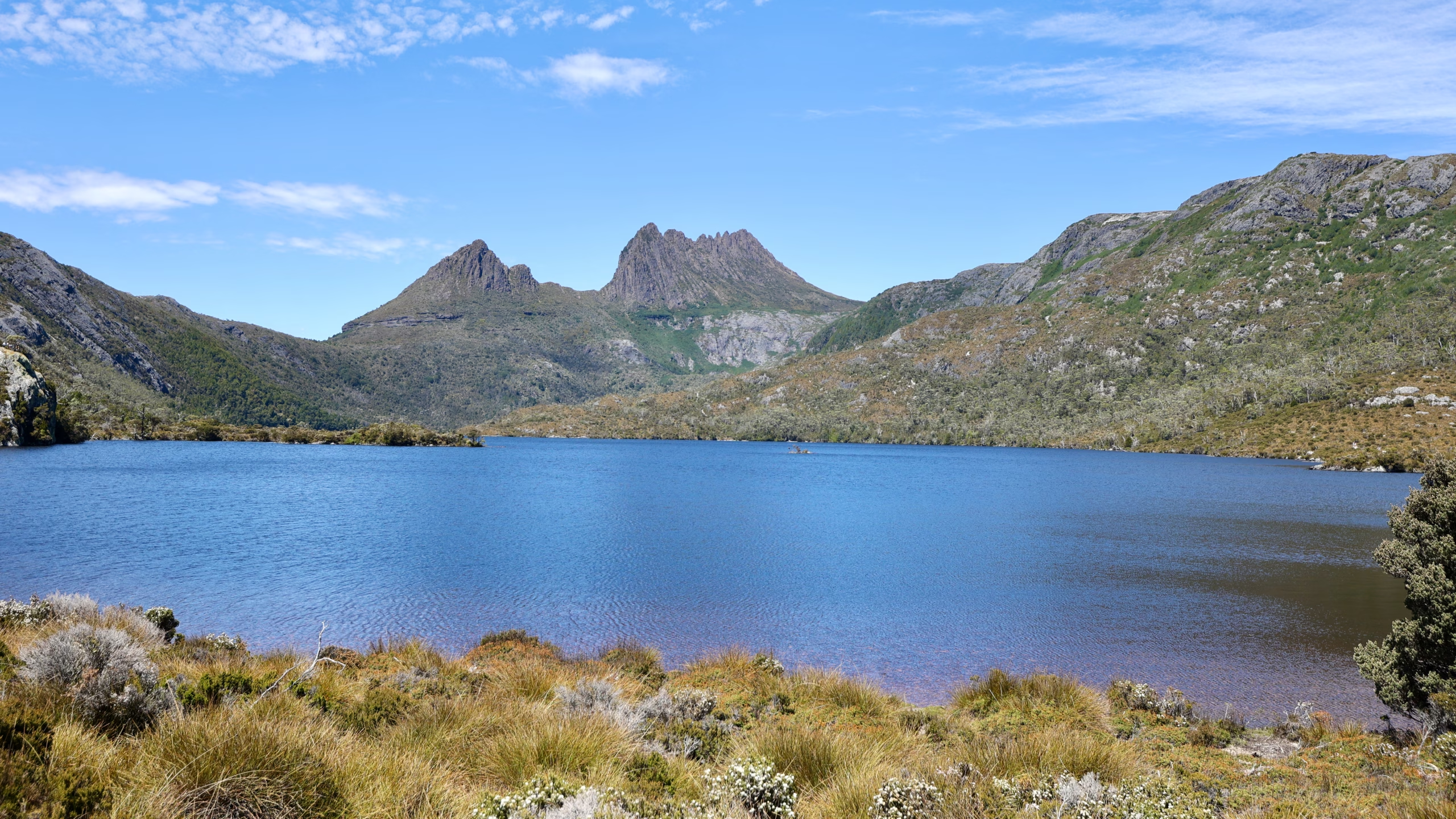
I have visited 45 countries, and I have seen some genuinely beautiful places along the way. Cradle Mountain belongs in that list – and I was not expecting it to hit as hard as it did.
This was my second day in Tasmania. I had based myself in Launceston rather than Hobart, which turned out to be a smart decision – Launceston is only about 2.5 hours from the park, compared to roughly 4 hours from Hobart. More time at the mountain, less time staring out a bus window.
Here is the full story of the day, plus everything you need to plan your own trip.
Cradle Mountain day trip from Launceston – quick summary
| Detail | Information |
|---|---|
| Distance from Launceston | ~145km, approximately 2.5 hours by road |
| Distance from Hobart | ~300km, approximately 4 hours by road |
| Best way to get there | Guided tour or rental car (no public bus service) |
| Guided tour includes | Transport, packed lunch, national park entry, guide |
| Park entry – Icon Daily Pass (independent) | AU$27.95 per adult (includes shuttle bus) |
| Shuttle bus ticket (other passes) | AU$15 per adult, valid 72 hours |
| Shuttle bus – summer | Every 10-15 minutes, 8am to 6pm (Oct-Mar) |
| Shuttle bus – winter | Every 15-20 minutes, 9am to 5pm (Apr-Sep) |
| Dove Lake Circuit | 6km loop, 2-3 hours, walk clockwise |
| Walk difficulty | Easy to moderate – no hiking experience needed |
| Best time to visit | November to March for day trips |
| Children under 18 | Free on shuttle bus |
How I booked – and how I saved AU$450 on Australian tours
I booked through Klook. The tour included transport from Launceston, a packed lunch, and national park entry – so no separate Parks Pass needed, which is worth knowing upfront.
One thing that made a bigger difference than I expected: Klook’s multi-tour pass. Rather than booking each Australian day trip individually, I bought a 5-tour bundle that saved me around AU$450 across the trip. You can buy from 2 to 5 tours and choose from 23 available experiences across Australia – Cradle Mountain, Bruny Island, Wineglass Bay, Mount Wellington, and more. If you are planning more than one or two guided days in Australia, check the bundle price before booking anything separately. The saving is real.
The drive from Launceston – scenic before you even arrive
The bus picked up near the Centennial Inn on Bathurst Street – central Launceston, which worked well for me. We left early morning, which is standard and necessary given the distance.
What surprised me was how quickly the landscape drew me in. Within the first half hour we were passing flat farmland dotted with hay bales and calm rivers, the kind of pastoral scene you do not expect to find this close to a World Heritage wilderness. Then gradually the terrain shifted – the horizon lifted, the vegetation thickened, and the first real mountains appeared in the distance.

By the time we were winding through the final approach, the forests were dense on both sides of the road and the air coming through the windows had changed completely. You know you are somewhere different well before you arrive.

Sheffield – the Town of Murals

Our first stop was Sheffield, about an hour from Launceston. I had vague expectations of a quaint country town with a few wall paintings. What I found was something more ambitious – over 140 large-scale murals covering buildings throughout the town, turning the entire place into an outdoor gallery. Some are photorealistic portraits, some historical panoramas, some quietly strange. All are worth stopping for.

Our guide handed out the packed lunches here – these are included in the tour price and sorted your food for later at the mountain. Public toilets are available in Sheffield and worth using before you continue, since facilities at Cradle Mountain are more limited. I also picked up some local desserts from a shop near the main street – something I would recommend doing if you have a few minutes spare. Sheffield is a proper stop, not just a photo opportunity.

Arriving at Cradle Mountain

After Sheffield the road gets narrower, the button grass plains open wide on both sides, and the sky seems to expand. It is a slow build, and it works.

The Visitor Centre itself is worth a moment – the angular dark cladding is architecturally interesting and sits well against the landscape. This is where independent visitors buy their Parks Pass and board the shuttle into the park. On our guided tour, park entry was already covered, so we went straight through. Use the toilets here – they are clean and better than what you will find further in. Then it is onto the Cradle Discoverer shuttle, a hybrid diesel-electric bus that runs every 10-15 minutes in summer, dropping at several stops before Dove Lake.
Dove Lake – where the day really begins

Nothing I had seen in photographs prepared me for the real thing. That sounds like something people say, but in this case it is simply true. Dove Lake sits in a glacial cirque at the base of Cradle Mountain, and when you step off the shuttle and walk the short distance to the viewing area, the scene hits you all at once – jagged dolerite peaks rising to 1,545 metres, perfectly framed above a lake so still and blue it looks painted.
No photograph quite captures the stillness of the lake. Here is a short clip from the shore:
Dove Lake, Cradle Mountain – filmed during the guided day trip from Launceston
We walked the circuit clockwise – the officially recommended direction, and for good reason. Going clockwise means you approach the mountain head-on for the first half, with the peaks growing larger and more dramatic with every step. The boathouse, the most iconic spot on the circuit, is saved for the far end. It is the better way round.


The track itself is well-maintained gravel for most of the circuit – manageable for most fitness levels, including people who do not normally hike. There are some uneven sections and a few rocky stretches, but nothing technical. Allow 2 to 3 hours for the full 6km loop at a comfortable pace, and do not rush it.

Then the boathouse comes into view. The old wooden structure sits right at the water’s edge, with a sandy beach in front of it and a mountain behind it that fills the entire frame of your photograph. This is where most people stop, sit, eat their lunch, and simply stare.

I was not planning to swim. The water is glacier-fed and cold even in January. But watching a few people from our group wade in and then just go for it – that kind of thing is contagious. Several jumped in. The cold was apparently spectacular. I stayed on the sand and ate my lunch with no regrets whatsoever.

Coming back counter-clockwise on the return leg, the mountain appeared from a new angle – less dramatic, more quietly beautiful, the jagged peaks softening into ridgelines as the afternoon light shifted.


Waldheim Cabins and the forest walk

After the lake, the tour took us to Waldheim Cabins – a collection of historic bush huts set back from the main track in the valley. From here we walked a short loop through Weindorfers Forest, and the change in environment from the open moorland was immediate and total.
The forest is cool and enclosed, filtered light coming through a canopy of ancient myrtle trees. Everything at ground level is covered in moss – fallen logs, rocks, the roots of trees. It has a primeval quality that is quite different from anything else in the park, and a welcome contrast after the wide open exposure of Dove Lake.

After the loop, we went inside Waldheim Chalet – the original log home of Gustav Weindorfer, an Austrian naturalist who spent years campaigning to have this area declared a national park. He built the chalet by hand in 1912, and lived here with his wife Kate, opening it to early visitors and lobbying the government until the park was finally gazetted in 1922. Standing in the building he built, in the landscape he fought to protect, carries a weight that sneaks up on you.

From the chalet, the Cradle Valley opened up in front of us.

Wide, flat valley floor stretching out between mountain ridgelines, scattered with button grass and ghost gums, completely quiet. It is a different kind of beauty from the drama of Dove Lake – more patient, more expansive. If Dove Lake is the photograph everyone takes, the valley view from Waldheim is the one that stays with you.
The honey shop on the way back
On the return to Launceston, the bus stopped at Cradle Mountain Honey – a small shop dedicated entirely to Tasmanian Leatherwood honey, made from the nectar of the native leatherwood tree that grows only in Tasmania’s west coast wilderness.

Their Leatherwood honey won the World Beekeeping Award for best honey in the world in 2015. The tasting is free – they put out several varieties with small spoons and let you work through them. Leatherwood has a strong, almost medicinal floral character that is quite unlike standard honey – either you find it extraordinary or slightly too intense, but it is unlike anything you will find elsewhere. Several people in the group bought multiple jars. The 500g jar was AU$15. I bought one. I have no regrets about that either.
We were back in Launceston by early evening – early enough that I still had time to walk to Cataract Gorge on foot, which let me explore the city centre along the way. That walk is covered in its own post.
Best time to visit Cradle Mountain
The honest answer is that Cradle Mountain has its own rules about weather. Snow has fallen there in every month of the year. Four seasons in one day is not a cliche – it is a practical warning. That said, the seasons do have distinct characters and some are more suitable for a day trip than others.
| Season | Months | Conditions | Best for |
|---|---|---|---|
| Summer | December to February | Warmest and driest. Average highs 15-19°C. Unexpected snow still possible. | Dove Lake Circuit, swimming at the boathouse, longer hikes, Overland Track. Peak crowds. |
| Autumn | March to May | Mild and often settled early on. Rainfall increases from April onward. | The Fagus – Tasmania’s only deciduous tree turns gold and copper. Fewer crowds than summer. |
| Winter | June to August | Cold. Average highs 5-9°C, lows around -2°C. Wettest months. Snow on trails very likely. | Snow-covered landscapes and dramatic atmosphere. Shorter, lower walks near the Visitor Centre recommended for most visitors. |
| Spring | September to November | Highly variable. September is wet and windy. Conditions improve significantly from November. | Wildflowers, active wildlife, waterfalls at full flow. Good from November onward. |
For a day trip from Launceston, November to March is the sweet spot. I visited in January and conditions were excellent – clear skies, warm enough to swim, long daylight hours. February is statistically the driest month. If autumn appeals, the Fagus colour change (usually late April into May) is one of the most spectacular and underrated natural events in Australia – the entire park shifts from green to a deep, burnished amber that looks nothing like its summer self.
Whatever month you choose: layers, waterproof jacket, enclosed shoes. Pack for rain even if the forecast says sun. The mountain makes its own weather.
Practical information – guided day trip
How to book: Book through Klook here. For multiple Australian tours, the Klook 5-tour bundle saved me around AU$450.
Pickup: Central Launceston hotels. Confirm your exact pickup point when booking.
What’s included: Transport, guided commentary, packed lunch, and national park entry. No separate Parks Pass needed. Confirm inclusions when booking as they can vary by operator.
What to bring: Layers, waterproof jacket, enclosed shoes, sunscreen, water. A small daypack is useful.
Return time: The tour returned to Launceston by early evening – I still had enough time to walk to Cataract Gorge and explore the city centre on foot. Good to know when planning your day.
Walk difficulty: The Dove Lake Circuit is 6km, 2-3 hours, gravel path, and accessible for most fitness levels. Walk it clockwise. Enclosed shoes are sufficient – hiking boots not required.
Based in Hobart instead? A guided day tour also departs from Hobart – the journey is longer (around 4 hours each way) but the logistics are handled for you. Book the Hobart to Cradle Mountain day tour here. Alternatively, if you are doing a one-way Tasmania loop, the Hobart to Launceston via Cradle Mountain tour covers the mountain as a through-route without backtracking.
Going independently – how to get there without a tour
No public bus serves Cradle Mountain – the Tassielink service that previously ran from both Launceston and Hobart was discontinued. If you prefer to visit on your own terms, your options are:
- Rent a car – the most practical choice for independent visitors. The drive from Launceston takes about 2.5 hours via Sheffield on a fully sealed road, though it becomes winding close to the park and can be icy in winter. Tasmanian rental prices are among the highest in Australia – compare early at DiscoverCars to lock in a better rate.
- Private transfer – operators run point-to-point transfers from Launceston to the Visitor Centre if you want to avoid driving without committing to a guided itinerary. Search options on GetYourGuide.
Park entry pass
Independent visitors need a Tasmania Parks Pass, purchased at the Visitor Centre on arrival:
- Icon Daily Pass – around AU$27.95 per adult, includes park entry and shuttle bus. Best for a single day.
- Holiday Pass – around AU$95.50 per vehicle for up to 8 people, covering all Tasmanian national parks for 2 months. Better value if you are visiting multiple parks.
Children under 18 travel on the shuttle bus free.
The Cradle Discoverer shuttle bus
Private cars cannot drive to Dove Lake during operating hours. Park at the Visitor Centre and take the Cradle Discoverer – a hybrid diesel-electric bus stopping at the Ranger Station, Snake Hill, Ronny Creek, and Dove Lake. In summer (October to March) it runs every 10-15 minutes from 8am to 6pm. In winter (April to September) every 15-20 minutes from 9am to 5pm. One-way to Dove Lake takes about 20 minutes. The ticket is valid for 72 hours – useful if you are staying overnight. Current timetables on the official Parks Tasmania page.
What if you want more than one day?
A day trip covers the highlights. But Cradle Mountain genuinely rewards those who stay. Most overnight visitors say they wished they had stayed a third night – the main reason being weather. If your first day is cloudy or rainy, a second day gives you another chance. Day trippers get what they get.
With 2 days, this is what becomes possible:
Day 1 – Dove Lake Circuit in the morning and early afternoon (6km, 2-3 hours). Enchanted Walk in the late afternoon – an easy 20-minute rainforest loop near Waldheim that is one of the best spots for wombat sightings at dusk. For the evening, choose between two after-dark experiences: the After Dark Tasmanian Devil Feeding Tour (around 5:30pm, gets you close to feeding Tasmanian Devils – a genuinely rare experience), or the broader Cradle Mountain Wildlife Spotting after Dark tour covering wombats, possums, pademelons and other nocturnal animals. Both are popular – book ahead.
Day 2 – Hansons Peak (5km return, about 2 hours) for elevated views looking down at Dove Lake and the circuit you walked the day before. For the more ambitious, Marion’s Lookout climbs to 1,250m with panoramic views across the entire valley. Start both early – wildlife is most active at dawn and the light on the mountain in the first hour after sunrise is something else entirely.
Wombats can be spotted in the open grasslands near Waldheim at dusk and dawn. Wallabies and pademelons appear on the valley floor regularly as the light fades.
Where to stay at Cradle Mountain
All options book out fast in peak season. Reserve well ahead.
If you would rather not manage accommodation and logistics separately, there is also a fully guided 2-day overnight tour from Launceston covering both Cradle Mountain and Wineglass Bay – a good option if you want to see both destinations without the planning overhead.
Frequently asked questions
Yes. Cradle Mountain is approximately 145km from Launceston, around 2.5 hours by road. A guided day tour departs early morning and returns by early evening, giving you enough time for the Dove Lake Circuit, Sheffield, Waldheim, and the honey stop on the way back. Starting from Launceston is smarter than from Hobart, which adds roughly 1.5 hours each way to the journey.
6km loop, 2 to 3 hours at a comfortable pace. Walk it clockwise – the officially recommended direction, which saves the historic boathouse for the end. The track is well-maintained gravel for most of the circuit and accessible for most fitness levels. No prior hiking experience is needed.
Not if you book a guided tour – transport is included. If visiting independently, there is no public bus service, so a rental car or private transfer is needed to reach the Visitor Centre. Once inside the park, private cars cannot drive to Dove Lake during shuttle bus operating hours regardless.
If you book a guided day tour, park entry is typically included – no separate pass needed. For independent visitors, an Icon Daily Pass costs around AU$27.95 per adult and includes the shuttle bus. A Holiday Pass covers all Tasmanian national parks for 2 months at around AU$95.50 per vehicle. Children under 18 travel on the shuttle bus free.
November to March for day trips – warmer, drier, more daylight. January and February are the driest months. Autumn (April to May) offers the spectacular Fagus colour change with smaller crowds. Winter is dramatic but cold and wet with snow likely on trails. Spring improves significantly from November, with wildflowers and active wildlife.
Yes, the Dove Lake Circuit alone justifies the trip. Add Waldheim, the forest walk, the valley views, and the drive through Sheffield, and it is one of the most complete and beautiful day experiences in Australia.
About 145km from Launceston (2.5 hours) versus roughly 300km from Hobart (4 hours). If Cradle Mountain is a priority, starting your Tasmania trip in Launceston rather than Hobart makes the logistics significantly easier.
Is the Cradle Mountain day trip from Launceston worth it?
Yes. I have been to 43 countries and Cradle Mountain is one of the most beautiful places I have seen anywhere. The Dove Lake Circuit, the forest at Waldheim, the valley views from the chalet, the drive through Sheffield – it adds up to a day that covers a lot of ground, in every sense.
Booking a guided tour made the whole thing effortless. No car needed, no navigation, no logistics. The guide’s commentary added context to what we were seeing, particularly at Waldheim where Weindorfer’s story gives the place real weight. The packed lunch, the honey stop, the Sheffield murals – they are not afterthoughts. They make the day rounder.
If you are in Launceston for two nights and you do only one day trip, make it this one.
Related posts
Trending Products