
Carry On Luggage Size: A Practical Guide for Stress-Free Travel


One of those travel-related details that most people believe they understand is the size of carry-on luggage—until they stand at the airport gate and watch their bag get tagged and sent to the hold. What worked last year might not work today because airline regulations differ and employees enforce them in different ways. Because of this, you can save time, money, and needless stress by being aware of carry-on luggage size.
Selecting the appropriate carry-on luggage size is more important than ever, whether you’re booking a low-cost airline like EasyJet, taking a long international trip, or traveling short distances within Europe. You won’t have to guess again thanks to this comprehensive guide, which offers practical advice, airline comparisons, packing suggestions, and purchasing advice.
What Does Carry-On Baggage Measure?
The maximum size of a bag that you can bring into the aircraft cabin instead of checking it into the hold is known as the carry-on luggage size. These restrictions are set by airlines to guarantee that bags fit securely in overhead bins or beneath the seat in front of you.
Most airlines define carry on luggage using:
- Height
- The width
- Depth
- Weight
The difficult part? Different airlines adhere to different standards.
Standard Size for Carry-On Baggage (General Rule)
Although airline regulations vary, the standard carry-on luggage size across the globe is:
| Measurement | Size |
|---|---|
| Height | 55 cm (22 inches) |
| Width | 40 cm (16 inches) |
| Depth | 20 cm (8 inches) |
| Weight | 7–10 kg (varies by airline) |
This size works for most full-service airlines and many international routes. However, budget airlines often allow smaller bags, especially on basic fares.
EasyJet Carry On Luggage Size Explained
If you frequently travel within the UK or Europe, understanding EasyJet carry on luggage size rules is essential.
EasyJet Free Allowance
Every EasyJet passenger can bring one small cabin bag for free:
| Bag Type | Size Limit |
|---|---|
| Small cabin bag | 45 × 36 × 20 cm |
| Weight | No official limit (must lift unaided) |
This bag must fit under the seat.
Paid Upgrade Option
With a paid seat or upgraded fare, you can bring an additional larger carry on:
| Bag Type | Size Limit |
|---|---|
| Large cabin bag | 56 × 45 × 25 cm |
| Weight | Max 15 kg |
👉 Tip: Many travelers buy bags marketed as “EasyJet compliant” to avoid gate fees.
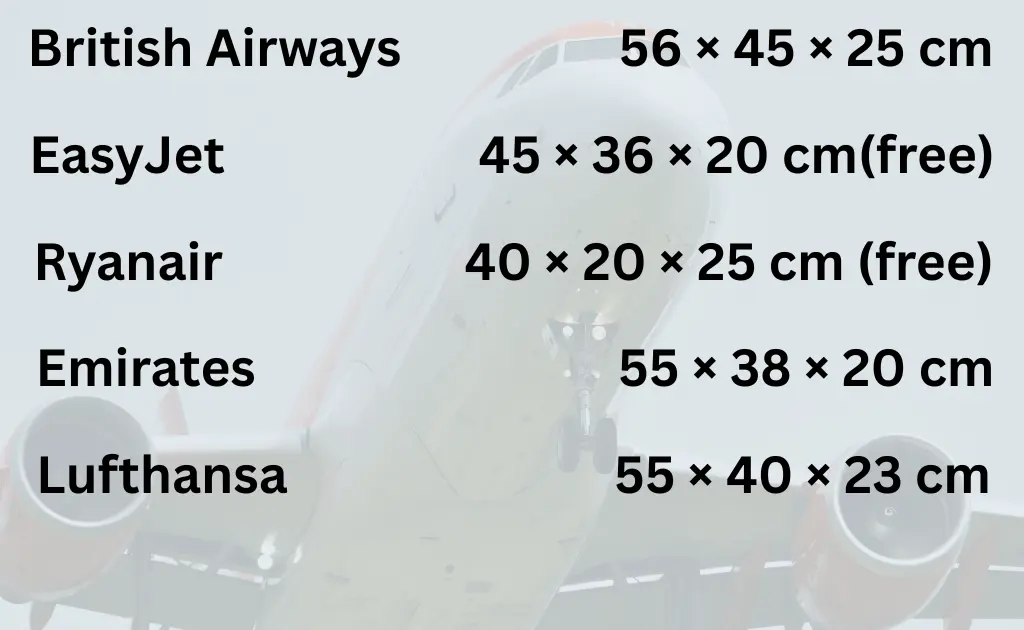
Carry On Luggage Size by Major Airlines (Quick Comparison)
Here’s a simplified comparison to help you plan smarter:
| Airline | Carry On Luggage Size |
|---|---|
| British Airways | 56 × 45 × 25 cm |
| EasyJet | 45 × 36 × 20 cm (free) |
| Ryanair | 40 × 20 × 25 cm (free) |
| Emirates | 55 × 38 × 20 cm |
| Lufthansa | 55 × 40 × 23 cm |
Best Carry On Luggage Size for Most Travelers
If you want one bag that works across multiple airlines, aim for:
55 × 40 × 20 cm
This size strikes the best balance between capacity and airline compatibility.
When shopping for the best carry on luggage, always:
- Measure wheels and handles (they count!)
- Check airline rules before booking
- Prioritise lightweight materials
Hard Shell vs Soft Carry On Luggage
Choosing the right type affects both packing and durability.
Hard Shell Carry On Luggage
Pros
- Better protection for electronics
- Water-resistant
- Clean, modern look
Cons
- Less flexible for tight bins
- Can crack under pressure
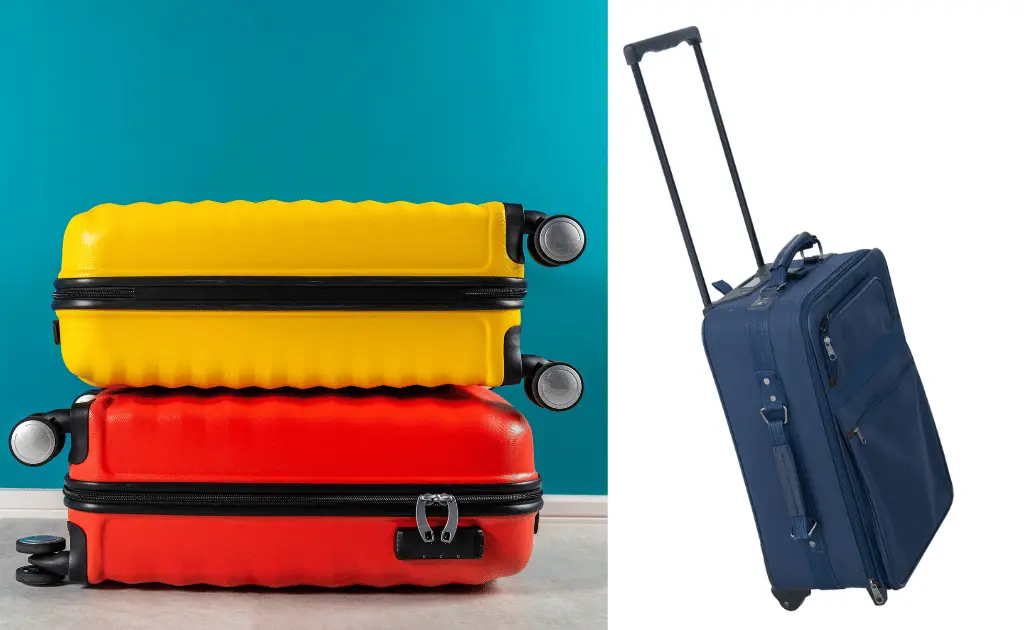
Soft Carry On Luggage
Pros
- Slightly expandable
- Easier to squeeze into overhead bins
- External pockets for quick access
Cons
- Less impact protection
- Can absorb moisture
👉 For strict carry on luggage size limits, soft luggage offers more forgiveness.
Also Read : Best Carry-On Backpacks vs Travel Suitcases – Which Is Better for Your Trip?
How to Pack Efficiently Within Carry On Luggage Size
Packing smart matters just as much as the bag itself.
Practical Packing Tips
- Roll clothes instead of folding
- Use packing cubes to organise space
- Wear bulky shoes during boarding
- Limit liquids to essentials only
- Use compression bags for clothing

Read more: Travel Essentials Buying Guide: What to Buy & What to Skip
Common Mistakes Travelers Make
Avoid these frequent carry on luggage errors:
- Ignoring wheel and handle measurements
- Assuming all airlines allow the same size
- Overpacking and struggling at boarding
- Choosing style over weight
- Forgetting return flight airline rules
Many gate fees are avoidable with basic planning.
How to Measure Your Carry On Luggage Correctly
Use a measuring tape and include: Wheels Handles Side pockets (if expanded) Measure outside dimensions, not interior space. Image placeholder: Insert image: “How to measure carry on luggage size correctly”
Best Carry On Luggage: What to Look For
When buying the best carry on luggage, focus on: Airline compatibility Lightweight construction (under 3 kg empty) Strong zippers and locks Smooth spinner wheels Warranty and durability Product link placeholder:
Check today’s top-rated carry on luggage on Amazon
FAQs: Carry On Luggage Size
What happens if my carry on luggage is too big?
Airlines may force you to check it at the gate and charge a fee—often higher than pre-booking baggage.
Is carry on luggage size strictly enforced?
Yes, especially on budget airlines like EasyJet and Ryanair.
Can I bring a backpack instead of a suitcase?
Yes, as long as it meets carry on luggage size limits.
Do airlines weigh carry on luggage?
Some do. EasyJet focuses more on size than weight, but enforcement varies.
Final Thoughts: Choosing the Right Carry On Luggage Size
Understanding carry on luggage size isn’t about memorising numbers—it’s about choosing flexibility. A well-chosen carry on saves time, avoids fees, and makes travel smoother from check-in to landing.
If you travel frequently or across multiple airlines, investing in the best carry on luggage that meets common size limits is one of the smartest travel decisions you can make.